Washi Tape vs PET Tape: What Is the Difference and Which Should You Buy?
Two tapes that look completely different but both end up in the same place: your journal pages. Washi tape is the one everyone starts with. PET tape is what people discover later and wonder why nobody mentioned sooner. They are not the same thing, they do not behave the same way, and they are not interchangeable. But they complement each other well, and once you understand what each one actually does, you will reach for the right one every time.
The confusion makes sense because both come on rolls, both are used in journaling, and shops often stock them side by side. Someone picks up a roll of transparent tape with a printed pattern and asks whether it is washi tape. Or they buy washi tape expecting to see through it onto a photo underneath, and it does not work that way. The materials, finishes, and use cases are genuinely different. This guide covers all of it.

What Is Washi Tape?

Washi tape is made from Japanese washi paper, which comes from the fibres of plants like kozo (paper mulberry) or gampi. The name itself means Japanese paper. Unlike standard printer paper, washi is made with long fibres that give it a natural texture you can feel when you run your finger across a good-quality roll. It is a matte or lightly satin finish, not shiny, and it tends to be slightly translucent in lighter colours while remaining opaque in denser prints.
The key practical qualities: the adhesive is low-tack, which makes it repositionable without damaging paper, it tears cleanly by hand with no scissors needed, and it lays flat without bubbling when applied carefully. A strip of quality washi tape along a page border looks like it belongs there. It has a warmth and physicality that printed paper cannot replicate.
What washi tape does best: borders and frames, layering decorative strips across page surfaces, sealing envelopes, covering stray marks, adding colour and pattern to a page without committing to something permanent. It is forgiving, which is why it is the first tape most journalers buy.
The one limitation worth knowing: washi tape is not waterproof. If your page gets wet, the tape will wrinkle. It also does not let images show through clearly. Lay washi tape over a photo and you will obscure most of what is underneath. For transparent layering effects, you need PET tape.
What Is PET Tape?
PET stands for polyethylene terephthalate — the thin clear plastic film that makes up most transparent tape. If you have ever used standard office sticky tape, you have used something made from a similar material. The difference with decorative PET tape for journaling is that the film carries a printed pattern, and the transparency is the whole point. You can see through it onto whatever is underneath.
The most immediately noticeable difference between PET tape and washi tape is the finish. PET tape is usually glossy, with a slight sheen that catches the light and gives journal pages a different look and feel.
Some journalers love that polished effect, while others find it too shiny compared to the soft, matte warmth of washi tape. For that reason, many brands, like us at CoraCreaCrafts, now offer PET tape with a matte finish. We also make PET tape with a matte transparent backing and a shine layer only on the printed designs, so it doesn't reflect too much under lights or in photos and videos.
PET tape does not tear cleanly by hand, so you usually need scissors or a craft knife to cut it. The adhesive is also more permanent than washi tape, which means it can be harder to reposition without leaving marks. These are not dealbreakers, but they do change how you work with it.
Because journalers are always looking for products that are easier and quicker to use, many transparent tapes are now also available with pre-cut designs. These work almost like stickers: you can peel off individual elements and place them directly onto your page without cutting around each design yourself.
What PET tape does best is create clear, layered effects. It can be laid over journal pages or artwork to add depth, used to create window-like details, or placed over flat ephemera like dried flowers and pressed leaves. It is especially useful for preserving delicate items on journal pages because it can create a seal that washi tape cannot.
The waterproof layer effect mainly applies to non-precut PET tape. To properly protect something, the tape needs to cover and seal the area completely. Pre-cut PET designs can still add decoration and light protection, but they will not waterproof a page unless the entire surface is sealed.
The Mystical Forest Transparent Tape shows a clear example of pre-cut tape with sticker-like elements that you can peel off and place individually. The transparent backing lets the designs sit lightly on the page, adding depth and decoration without fully covering what is underneath.

Mystical Forest Transparent Tape: printed PET tape — the pattern layers on top while the transparency lets whatever is underneath show through
Side-by-Side Comparison
| Feature | Washi Tape | PET Tape |
|---|---|---|
| Material | Japanese washi paper (plant fibre) | Thin clear plastic film (polyethylene terephthalate) |
| Finish | Matte or lightly satin | Glossy / shiny but can also be matte |
| Transparency | Semi-translucent to opaque (obscures what is below) | Transparent — you can see through it |
| Cutting | Tears cleanly by hand | Requires scissors to cut unless already pre-cut |
| Repositionable | Yes (low-tack adhesive) | Harder to reposition once applied |
| Waterproof | No | Yes |
| Best for | Borders, layering, decoration, page framing | Photo overlays, adding small touches, transparent window effects, creating mini layered worlds |
| Feel / texture | Warm, slight paper texture | Smooth, plastic feel |

When to Use Washi Tape
Washi tape is the everyday workhorse of journaling. Reach for it when you want to add decoration, color, texture, or structure without committing to something permanent. It is easy to tear, easy to layer, and simple to remove or reposition, which makes it one of the most forgiving supplies to work with.
Create a background
One of the easiest ways to use washi tape is to cover an entire page or section of a page and turn it into a background. Lay strips side by side, slightly overlapping each one, until the surface is filled. This works especially well with patterned tapes, like our Enchanted Forest Foil Washi Tape or the Samarkand Washi Tape because the repeated design instantly gives the page a theme.
Tapes with lighter patterns like the Vintage Mushrooms Washi Tape or the Birds & Foliage Washi Tape also work well for this because the botanical print creates an earthy, nature-inspired base. Once the background is down, you can write over it, layer paper or sticker pieces on top, or use it as a starting point for a woodland-style journal spread.

Birds & Foliage Washi Tape: strips laid side by side to fill an entire page and create a dense botanical background
Create borders or a frame
Washi tape is also perfect for creating borders. A single strip along the top, bottom, or side of a page can frame your layout and make it feel more finished. You can use it to outline a photo, surround a quote, or create a box around a journaling section.
I especially enjoy using thinner washi tapes for this, like the Celtic Vibes Washi Tape Set and the Celestial Foil Washi Tape Set. Run it along the edge of a page, around a paper insert or even around a window you cut out on your page and it gives the spread an amazing look. It is an easy way to make a journal page look like something found in an old book rather than freshly made.

Celtic Vibes Washi Tape Set in use: tape running along page edges and around inserts to create framed, manuscript-style borders
Create a pattern
Instead of using washi tape only in straight strips, you can also use it as patterned paper. Stick a few strips onto backing paper, then cut smaller shapes from the pattern. Stars, circles, tabs, stamps (great use for your hole punches if you have any!) labels, corners, and small torn pieces can all become decorative accents.
This is a good way to make one tape go further. A design like Enchanted Forest Foil Washi Tape can be used in tiny pieces where you only want a touch of shimmer. The foil catches the light, but because it is still washi, it keeps the soft paper feel and remains easy to cut, tear, and layer.

Washi tape as base layer: strips cover the page, then cut shapes and collage pieces are layered on top to build the spread
Create Dutch doors or scalloped edges
Washi tape is also useful for adding structure to journal pages. You can use it to reinforce the edge of a page, separate pages by creating tabs, decorate a fold-out section, or create a shaped border. Apply the tape along the edge of the page, then cut around the design to create a scalloped, torn, or decorative outline.
Cutout-style tapes are especially good for this because the printed shapes can guide where you cut. Some of my all time favorites are the Roll of Arms Cutout Tape, the Clouds Cutout Tape, The Burnt Writing Washi Tape Set, and the Potions Cutout Tape. Those can also be layered along page edges or fold-outs to create manuscript-style texture. It adds the feeling of old notes or archival paper while still behaving like classic washi: flexible, lightweight, and easy to work with.

Celestial Foil Washi Tape Set: tape layered across both pages creates a structured spread with room for fold-out inserts and layered ephemera
Washi Tapes for Every Technique
Whether you are covering a full page, framing a spread, cutting shapes, or building Dutch door structures, each of these tapes does a different part of the work.
When to Use PET / Transparent Tape
PET tape earns its place on a journal page when you want crisp printed elements, transparency, layering, and a more polished finish than washi. It is less about soft paper texture and more about clear designs that can sit lightly on the page.
Use PET tape for sticker-like decoration
One of the easiest ways to use PET tape is choosing a pre-cut design. These transparent tapes come with individual elements you can peel off and place like stickers, without cutting around each shape yourself.
This makes PET tape especially useful for detailed motifs like flowers, mushrooms, frames, labels, moons, butterflies, books, or vintage illustrations. The Mystical Forest Transparent Tape, for example, works well for woodland-style journaling because the individual elements can be placed across a page like small decorative stickers.
For themed historical spreads, the Ancient Egypt Transparent Tape, and for a cozy theme, the Tea Lover Transparent Tape and Coffee Lover Transparent Tape are good choices for cozy journal pages, recipe notes, cafe memories, or happy mail.

Transparent tape elements used like stickers on a habit tracker spread: Celtic crosses, standing stones, and moss designs placed individually across the page
Use PET tape for layering
PET tape is useful when you want to build depth. Because the material is transparent, the design can sit over paper, photos, collage pieces, or even on top of each other (yes, you can layer multiple elements from the same tape).
The Libraries Transparent Tape and Light Academia Transparent Tape are good examples for study, reading, or vintage-paper spreads. For moodier pages, the Poe Transparent Tape or Dark Academia Transparent Tape can add a more literary, gothic feel.

Layered transparent tape elements building up an ivy and garden scene: birds, butterflies, and vines placed over each other to add depth and visual richness to the spread
Use cutout transparent tape for scene-building
We spoke about creating frames and edges with washi tapes, but this is also possible with transparent tapes.
Some transparent tapes are especially good for creating that. For example, you could use a strip of our Ivy Transparent Cutout Tape or Wisteria Transparent Cutout Tape to set the scene of a beautiful spring or summer day. You could use the Hills Transparent Cutout Tape, layered onto each other, to create a beautiful landscape. Instead of using one strip, you can also place individual elements around a spread to create movement and visual storytelling.

Transparent cutout tape strips layered to build a landscape scene: castle ruins, misty hills, and Celtic details placed across both pages to create a complete illustrated spread
Use non-precut PET tape for sealing flat items
PET tape can also seal flat, delicate ephemera onto a page, but this works best with non-precut tape. A continuous strip or sheet can cover the full item and seal the edges properly.
This is useful for thin materials like pressed leaves, dried flowers, or small paper fragments. Pre-cut transparent tapes are excellent for decoration and layering, but they will not create a waterproof or protective layer unless the whole surface is covered and sealed.
PET tape can be placed over handwriting, sketches, or photos, but it works best when the design is light enough not to compete with what is underneath. Use PET tape carefully over writing or artwork, as removing it to change the placement will likely rip off the writing on your page underneath. Busy prints or glossy finishes can make text harder to read.
For softer texture, tapes like the Knots Transparent Tape or The Fade Between Tape Loop can add atmosphere without completely taking over the page.
Transparent Tapes for Every Technique
Whether you are placing individual elements like stickers, building depth with layers, creating a scene across a full spread, or sealing something fragile to the page, transparent tape gives you options that washi cannot.
Using Both Together
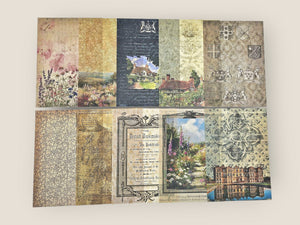 Whispers of the Countryside Rice Paper Collection: $16.00
Thin paper layers that work beautifully under PET tape
Shop now
Whispers of the Countryside Rice Paper Collection: $16.00
Thin paper layers that work beautifully under PET tape
Shop now
The two tapes are not competitors. A page with both on it is entirely normal, and the combination often works better than either one alone. Washi handles the outer layer of the design: borders, frames, decorative strips that add colour and pattern to the edges and background. PET handles the inner layer: transparent sealing, overlay effects, anything where visibility through the tape matters.
A combination I use regularly: washi tape borders on three sides of a spread, with a strip of transparent tape across the centre over a dried flower or a piece of patterned tissue paper. The washi provides the visual weight. The transparent tape creates the effect in the middle without competing with the washi framing around it.


The key is knowing which one to reach for first. The general rule: if transparency matters, reach for PET. If you need colour, pattern, or structure, reach for washi. Once you have internalised that distinction, you stop hesitating at the supply drawer.
Both tapes pair well with rice paper and layered ephemera. The Whispers of the Countryside Rice Paper Pack gives you thin, slightly transparent paper layers that work beautifully under PET tape. Seal a piece of patterned rice paper with transparent tape, then frame it with washi. Complete spread base in three steps.

Enchanted World Washi Tape: the matte finish layers beautifully alongside PET tape without competing
Building a Starter Collection
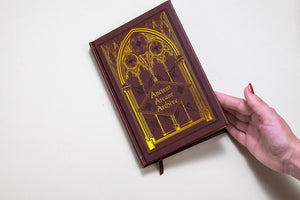
 Mystical Woodlands Sticker Book: $25.00
Sticker book to layer alongside your tape collection
Shop now
Mystical Woodlands Sticker Book: $25.00
Sticker book to layer alongside your tape collection
Shop now
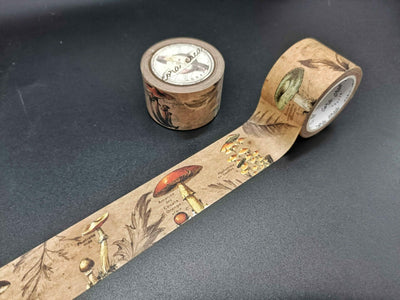
A more sensible approach: start with two or three washi tapes and one transparent tape. Choose washi tapes that suit the colour palette you are working with. If you tend toward warm earthy tones and natural imagery, the Vintage Mushrooms Washi Tape is a reliable first choice. If you want dark and aged effects, the Burnt Edges Washi or the Burnt Writing Set gives you that direction.
Add one transparent tape to the mix so you have the option when you need it. You will not use transparent tape on every page, but when you encounter a dried flower you want to preserve, or a photo overlay you want to try, you will be glad it is there.
The three items that cover everything in this article:
- Vintage Mushrooms Washi Tape — borders, layering, and decoration
- Mystical Forest Transparent Tape — photo overlays and ephemera sealing
- Herbal Magic Sticker Tin — stickers to layer alongside your tape

Seasonal washi tapes are worth adding once you have the basics — the matte finish stays consistent across all washi designs

The fine print resolution on quality washi tape holds up even at small widths — which is why it reads well at journal scale
From there, add tapes one at a time as you identify gaps in your pages. If you notice every spread looks similar and lacks variety, that is when to expand. Starting small means you actually learn what each tape does.

Dream Vines Foiled Tape Set: buying a coordinating set ensures everything works together — smarter than buying individual rolls at random
Start With What You Will Actually Use
Two or three washi tapes and one transparent tape covers most of what you need for your first several journal pages. Here is a good starting point for each category.
Washi Tape
Matte, repositionable, tears by hand. For borders, layering, and decoration.
Browse WashiTransparent Tape
Glossy, waterproof. For photo overlays, sealing ephemera, and window effects.
Shop This TapeAdd Stickers
Tape works best alongside stickers and paper layers. Start a full collection here.
See All Stickers
FAQ
Is PET tape the same as washi tape?
No. They are made from completely different materials, have different finishes, and behave differently on a page. Washi tape is made from Japanese washi paper and has a matte finish. PET tape is made from thin clear plastic film and has a glossy finish. Washi tape obscures what is underneath it; PET tape is transparent so you can see through it. Both are used in journaling, but they are not interchangeable.
Can PET tape be used for journaling?
Yes, and it is particularly good for specific effects that washi tape cannot achieve. PET tape is ideal for transparent overlays over photos or artwork, sealing and preserving dried flowers or pressed botanicals flat onto pages, and creating window-like effects where the pattern sits on top without hiding the content underneath. If you want to see through the tape, PET tape is the right choice.
Which is better for beginners, washi or PET tape?
Washi tape is the better starting point for most people. It is more forgiving because the adhesive is repositionable, so mistakes are easy to fix. It tears by hand rather than needing scissors, which makes it faster to work with. There is also a much wider variety of designs in the washi tape category, which gives beginners more options. Start with washi and add a transparent tape once you understand how you actually use tape on your pages.
Can washi tape be used over photos?
Yes, but it will partially or fully obscure the photo depending on how opaque the tape is. If you want the photo to remain visible through the tape, PET tape is the better choice. Washi tape over a photo works well when the goal is to frame or partially cover the photo rather than overlay it transparently. Some journalers deliberately cover parts of photos with washi for an intentional collage effect.
Does PET tape yellow over time?
Quality PET tape does not yellow noticeably under normal conditions. Cheaper versions, particularly those made with lower-grade plastic or adhesive, sometimes discolour over time especially when exposed to light or humidity. If longevity matters to you, look for tapes described as archival-quality or acid-free. Keeping finished journals away from direct sunlight also helps preserve all tape types, not just PET.
See also
Happy decorating,
More from the Blog

22 June 2026
Cyanotype Journal Pages: Easy Sun Prints, No Drawing

14 June 2026
Pressed Flower Journaling 2026

20 May 2026
ADHD Journaling: How to Build a System That Actually Sticks

14 May 2026
How to Start a Junk Journal in 2026

18 April 2026
Mother's Day Stationery Gift Guide 2026: For the Journaler in ...

18 April 2026
Travel Journal Setup Guide for Beginners | CoraCreaCrafts