Poetcore Journaling: A Complete Guide for National Poetry Month
April is National Poetry Month. If you've been watching poetcore spread across Pinterest and wondering how to bring that aesthetic into your own journal, this is the right time to start. The aesthetic is built for this month specifically: warm parchment, handwritten words, dried flowers, wax-sealed letters, the kind of morning where you make tea and sit down to write something real.
Poetcore is the journaling aesthetic of 2026 for anyone who thinks of their journal as a place for personal writing first and visual decoration second. The palette runs from cream and dusty rose to deep burgundy and aged gold. The textures are layered and literary. The supplies are thoughtfully chosen rather than just decorative. If you want everything for the month curated in one place, the Poetic Spring Box covers it — sticker sheets, washi, and ephemera selected together for April spreads.
Your Journal and Paper Base
Before stickers and washi tape, the foundation matters. The poetcore aesthetic is paper-forward. The texture, weight, and color of what you're writing on shows through every layer on the page, and it sets the register for everything you put on top of it.
The Ancient Arcane Foil Notebook is the kind of base journal that already looks like a poetry collection before you write a single word in it. The foil cover sets the literary register immediately, and the paper inside takes ink well without bleed-through. It's the right starting point for a poetcore setup because the journal itself does some of the visual work from the first page.
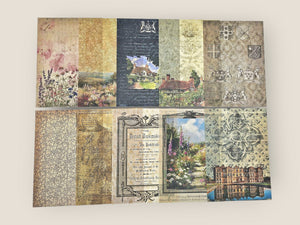
Rice paper overlays are what give poetcore pages their characteristic layered texture. The Whispers of the Countryside Rice Paper Pack gives you that faded, semitransparent quality that layers onto a page like a pressed flower. Laid over handwriting or a light watercolor wash, rice paper creates depth without adding weight to the page. It's one of the defining materials of the aesthetic.
The Birds, Foliage & Butterflies Sticker Tin brings the natural world into your pages. Fifty transparent stickers across birds, foliage, butterflies, and botanicals — the illustration style sits at the literary naturalist register that poetcore asks for. Layered over rice paper or used to anchor a poem on the page, they add life without the graphic weight of print stickers. The transparency means you can build them over handwriting without covering it.

When the writing is the visual element, you want stickers that enhance rather than cover it. The Fountain Pens Clear Stickers are transparent, which means they sit on top of handwriting without hiding what's underneath. For a poetry journal where the words matter, clear stickers are the right choice. They add visual texture without substituting for the text.

Start Your Poetcore Base
The Ancient Arcane Foil Notebook as your journal, Whispers rice paper for layered texture, Birds, Foliage & Butterflies Sticker Tin for transparent botanical layers, and Fountain Pens Clear Stickers to keep the writing front and center.

A finished poetcore spread built with the Birds, Foliage & Butterflies Sticker Tin, rice paper, and gold foil washi — the layered, assembled quality that defines the aesthetic.
Wax Seals and Stamps
Every poetcore journal has a signature element, something that makes it feel like a one-of-a-kind object rather than a decorated notebook. For most poetcore journalers, that's a wax seal. The imperfect, handmade quality of a pressed seal is something no sticker can replicate. It signals that the person making these pages used their hands, took their time, made a choice.
The Writer Collection Premade Wax Seals are the ones I reach for first. They're already made, so there's no wax pot or heat gun involved. Each seal has that slightly irregular, handmade quality that looks genuinely personal. Press them onto journal pages, tucked-in notes, folded inserts, or the edges of collage layers. They work anywhere a page needs a finishing touch that says someone made this with care.

If you want to make your own seals with a custom design, the Orchid Seal Handle gives you a stamp-and-wax setup to create seals in whatever color wax you choose. Building a repeating orchid motif across a whole journal creates the kind of visual continuity that makes a spread feel intentional.

The Lady of the Forest Wooden Stamp brings figurative, botanical imagery into a spread. Unlike modern rubber stamps, a wooden stamp has slight ink variation and irregular edges that look genuinely aged. Stamped in sepia or ochre on ivory paper, it anchors a poetcore page without competing with the handwriting around it.

The Specimen Magic Sticker Tin brings an illustrative, curio-cabinet quality to the wax seals section. Stickers with specimen-style drawings, magical motifs, and botanical studies layer in with premade seals to give a spread the feeling of a naturalist's archive. Use them to frame seal impressions, anchor a poem fragment, or fill the quiet corners that seals alone can't reach. The mix of specimen and magical imagery gives each page a sense of something discovered rather than arranged.

If you want the wax seal look without an open flame, the Vintage Faux Wax Stickers give you that aged, impressed-seal aesthetic as a peel-and-place sticker. The designs look like pressed wax — slightly imperfect, dimensional. They're ideal for journal pages, folded letters, and any spread where you want the seal effect but not the process. A practical finishing touch for every page that needs a closing detail, and a good travel alternative to wax and a heat source.

The Seal and Stamp Kit

Premade wax seals for pages and letters, an orchid handle and rosewood furnace for custom seal-making, sealing wax beads in your choice of color, a botanical wooden stamp, specimen magic stickers for curio-cabinet depth, and faux wax stickers for flame-free finishing.
Washi and Layering Materials
Washi tape is where poetcore spreads get their depth and their aged quality. The aesthetic asks for thin, layered elements rather than bold flat applications. For that, foil tape and transparent tape work better than print washi. The goal is a page that looks like it was built up over time, not decorated in one session.
Dream Gold Foil Washi Tape is the accent that most poetcore spreads need. A thin strip of gold along the margin of a page, or running across a corner, catches light and gives the spread that antique-gilt quality. It's the same visual language as illuminated manuscripts, brought into a personal journal. One roll goes further than you'd expect because the effect works best in narrow strips.

Cathedral Bloom Transparent Tape does something different: it adds botanical and architectural image layers while keeping everything underneath visible. You can layer it over handwriting, over rice paper, over other washi, and still see through. The botanical shapes in the design give poetcore spreads a slightly ecclesiastical, literary feeling that sits naturally with poetry month.

The Burnt Writing Washi Tape Set gives you the manuscript text pattern that reads immediately as old writing. A strip of this across the background of a spread suggests pages from a letter, a diary entry, a text that was written and then partially obscured by time. It adds narrative to a page in a way that most washi can't, because the imagery is text rather than illustration.

The Enchanted Forest Foil Washi adds deeper botanical imagery for pages where you want contrast. If the rest of a spread is warm parchment and gold, a strip of the darker forest foil at the edges creates visual weight without using dark paint or heavy collage elements. It's useful for separating sections within a spread or framing the edges of a dedicated poem page.

Build the Layers
Gold foil for that antique-gilt accent, cathedral bloom for transparent botanical overlay, burnt writing for manuscript texture, and enchanted forest foil for depth at the edges.


The washi collection for April spreads: botanical prints, handwritten script, soft florals, and textured overlays — each strip adds a different dimension of depth to a poetcore page.
Stickers and Ephemera
Write one thing down every day in April. It doesn't have to be a poem. It just has to be true. Coralie, CoraCreaCrafts
Poetcore stickers are different from most journaling sticker collections. The illustration styles that work here are naturalist and vintage rather than flat or cartoon-style: specimen drawings, nature study prints, literary motifs, aged-paper cutouts. Modern bright graphics pull a poetcore spread in the wrong direction even when the subject matter — flowers, birds, leaves — is the same.
The Moody Flowers Sticker Tin is built for poetcore's color register: deep roses, dark florals, and botanical illustrations that read as aged rather than bright. The palette runs toward oxblood, dusty mauve, and deep green — the same tones that anchor a poetcore spread's background layers. These are not cheerful spring flowers. They add floral density without the cottagecore lightness, which is exactly the distinction that keeps poetcore from reading as something softer than it is.
The Specimen Ephemera: Mysteries of the Night Cutouts bring the collage quality that makes poetcore pages feel assembled over time. These are vintage specimen-style cutouts designed to overlap, layer, and tuck into corners. They work best in the background layer of a spread, beneath rice paper and washi, creating depth you can see but not quite place — which is exactly the mood poetcore pages aim for.


Birds, Foliage & Butterflies Sticker Tin alongside foil washi and wax stamp elements — the naturalist layer that makes poetcore pages feel assembled rather than decorated.
The Swirling Dreamscape Sticker Tin adds a surreal, literary quality to spreads that other sticker collections can't quite reach. The imagery — illustrative, layered, otherworldly — works as mid-ground decoration between a poem and the page edge. These are atmospheric stickers rather than functional ones. Use them when a spread needs visual complexity without a single focal element taking over. The dreamscape quality gives poetcore pages a depth that feels imagined rather than built, which is exactly the tone April spreads tend to want.

Stickers and Ephemera for Poetry Spreads
Moody floral stickers in the poetcore palette, vintage specimen cutouts for collage depth, and swirling dreamscape stickers for atmospheric mid-ground complexity.


A literary sticker sheet built for poetcore spreads: stacked books, ink quills, botanical bouquets, envelopes, and candlelight — the imagery of a poet's desk, made for the page.
Pen Pal Season
April is National Poetry Month, and it's also the best month to start a pen pal practice. The two things share the same impulse: taking time to write something personal for someone specific, in a form that feels intentional. A poetcore journal setup and a letter-writing kit are essentially the same supplies used in two directions.
The wax seals you use to close your journal spreads close the envelopes. The rice paper overlays you layer into spreads can go inside a letter as writing paper or decorative inserts. The gold foil washi that runs along your page margins decorates the envelope flap. No separate haul is required. The poetcore kit is already a pen pal kit.
If you're looking for where to start: write one letter in April. It doesn't need to be long. It just needs to be addressed to someone specific, written by hand, and sent with a wax seal. That's the whole practice, and the supplies in this guide are everything you need to do it well.
 ►
►
April Spread Ideas for National Poetry Month
If you want something to work toward this month, here are seven spread formats that fit the poetcore aesthetic and the poetry month theme. Each one works independently or as part of a larger April journal project.
-
Poem-a-Day spread: One page per day with a poem you wrote or one that moved you. Date it, write it by hand, and let the page be simple. This is the foundational poetcore practice. writing
-
Found-text collage: Cut words and phrases from old books, photocopies, or printed pages. Layer them with rice paper and washi. Create visual poetry from existing text. visual
-
Letter to your past self: Write it as a proper letter, fold it into the journal, and press a wax seal over the fold. Leave it there. letter
-
Annotation spread: Take a poem you love and write it out across two pages. Annotate it in the margins. Let the commentary become part of the visual design. writing
-
Monthly poetry index: One spread at the start of April as an index page, with space to add poem titles and dates as you go. The index becomes a record of what the month held. visual
-
Field notes in verse: Write about what's growing outside, in the garden or on your street, in short verse fragments rather than prose. One or two lines per plant, pressed with a botanical sticker. writing
-
Pen pal reply spread: If you send a letter, document it in your journal on the same day. Write what you said, what you sealed it with, what stamp you used. Make the sending part of the spread. letter
The Poetic Spring Box
If you want everything for April in one place — the sticker sheets, the washi, the ephemera, all curated for the season — the Poetic Spring Box is it. A hand-picked collection built around spring and the literary aesthetic, delivered together. This is the shortcut from blank journal to finished spread without sourcing each piece separately.


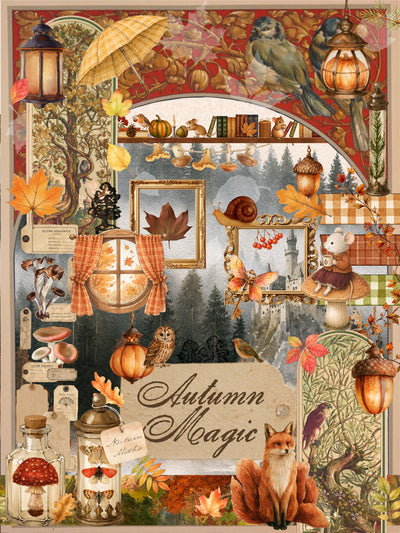
Inside the Poetic Spring Box: sticker sheets with reading figures, blooming archways, garden scenes, and the soft pastoral imagery that makes April pages feel like they belong in a particular moment.
The Complete Poetcore Kit
Everything from this guide in one place: the base journal, the seals and stamps, the washi layers, and the stickers that make April spreads worth keeping.
The shortcut
Curiosities Box - Bimonthly Subscription
Everything above — sticker sheets, washi, and ephemera — curated for April and delivered together. One box instead of five separate orders.
Get the Poetic Spring Box
The Journal
Ancient Arcane Foil Notebook — a literary cover that sets the register before you write a word.
View product
The Signature Element
Writer Collection Wax Seals — for journal pages, tucked notes, and letters worth sending.
View product
The Texture Layer
Whispers of the Countryside Rice Paper Pack — the layered, parchment quality that defines the aesthetic.
View productFrequently Asked Questions
Poetcore journaling is a style of keeping a personal journal that puts the written word at the center of every spread. It draws on the imagery of handwritten verse, ink-stained notebook pages, dried flowers pressed flat, wax seals on folded letters, and warm candlelight. The aesthetic is personal and lyrical rather than structured or scholarly. A typical poetcore spread might hold a poem fragment in your own handwriting, a pressed botanical layered under rice paper, a wax seal stamped into the corner, and a swatch of worn-looking washi tape. It is less about planning and tracking and more about creating pages that feel like they belong in someone's private literary archive.
The most important ingredient is a journal with paper that accepts multiple layers without buckling. From there, the staple supplies are textured layering paper (rice paper packs work beautifully), a set of wax seals for finishing touches, at least one washi tape with a handwriting, botanical, or aged-paper texture, and some form of literary sticker or label to anchor the writing mood. The Ancient Arcane Foil Notebook is a strong starting point because its cover already carries the right aesthetic energy. Add the Whispers of the Countryside Rice Paper Pack
 for layering, the Writer Collection Wax Seals
 for correspondence details, and the Burnt Writing Washi Tape Set
 for manuscript-text overlays, and you have a complete poetcore starter kit.
Start with a warm background: layer rice paper or a page torn from an old book over the base page, then apply a strip of aged-paper or manuscript-text washi along one edge. Write a short poem or quote in the center, in your own handwriting if possible, and leave space around it rather than filling every corner. Add a pressed flower or a botanical stamp impression in one corner. Seal the opposite corner with a wax stamp if you have one. For color, reach for burgundy, warm gold, and aged cream rather than bright tones. The goal is a page that looks like it has been kept for years, not decorated for the gram. Imperfection is the point.
Both aesthetics are literary and moody, but they have a different emotional register. Dark academia is cool, structured, and institutional: gothic architecture, classical literature, candlelit libraries, and rich dark tones in brown, charcoal, and forest green. Poetcore is warmer and more intimate: it is less about the idea of scholarly life and more about the private act of writing. The colors run toward parchment, burgundy, and aged gold. The imagery leans toward personal correspondence, pressed botanicals, and handwritten drafts rather than manuscripts and architectural grandeur. A dark academia spread looks like a scholar's notebook. A poetcore spread looks like a poet's diary.
Yes, and it works especially well. National Poetry Month runs through all of April, which makes it a natural time to send handwritten letters to pen pals. The supplies that make a great poetcore journal page also make beautiful letter components: wax seals for the envelope closure, rice paper inserts tucked inside, a strip of washi tape along the fold, a handwritten poem copied onto a card. If you keep a pen pal journal alongside your regular journal, you can use the same spread techniques for both. Some journalers dedicate one spread per letter they send, treating the journal page as a record of the correspondence.
NaPoWriMo (National Poetry Writing Month) runs the entire month of April, and a poetcore journal is the most satisfying way to do it on paper. Each day, open to a fresh spread, write your poem in deliberate handwriting (fountain pen if you have one), and leave room around it rather than cramming the page. A strip of the Burnt Writing Washi Tape Set along the margin works well, or press a small botanical into the corner. You are not aiming for a polished page. You are making a document of the month, something you could pull out in five years and read as a record of a specific April. You do not need to be a poet. Use the daily prompt from napowrimo.net as a starting point and let the page carry the rest. By April 30 you will have thirty original pieces inside a journal that looks like it was kept for decades.
Poetcore and cottagecore share a love of analog objects and slow living, but their emotional register is different. Cottagecore journaling reaches outward: wildflower pressed spreads, soft watercolor borders, gratitude lists tied to the changing seasons. The feeling is a Sunday morning in a cottage kitchen. Poetcore reaches inward: ink-stained cream pages, sepia tones, oxblood accents, a torn fragment of Keats taped beside your own handwritten verse. Where cottagecore celebrates the pastoral and communal, poetcore is about the interior life. The half-formed thought. The poem drafted at midnight. The two aesthetics overlap more than they compete. Many journalers use cottagecore layering supplies (rice paper, pressed flowers) inside a poetcore color palette. The Whispers of the Countryside Rice Paper Pack works for both: its texture and translucency fit a cottagecore lightness just as naturally as a poetcore spread with darker ink and worn-paper accents.
For a poetcore journal, cream or ivory paper makes the single biggest visual difference. It photographs richer and reads as deliberately chosen rather than default. Aim for at least 100gsm so fountain pen ink does not ghost through; 120gsm handles washes and layering without buckling. For pens, a fine-line fountain pen slows your handwriting down in a way that makes the practice feel intentional rather than hurried. Sepia, forest green, and oxblood are the ink colors that photograph best against the poetcore palette. The Ancient Arcane Foil Notebook is a practical starting point: its paper weight handles fountain pens cleanly and the cover already carries the right literary energy, so the inside and outside feel like one coherent object. Dotted or blank pages give more flexibility than ruled lines if you are adding layered textures. Test any new ink on a spare page before writing your poem. It takes thirty seconds and saves the spread.
A poetcore reading journal goes beyond a book log and is one of the stronger hybrid formats of 2026. For each book you finish, dedicate a spread: write a short poem in response to a line or image that stayed with you, copy a favourite passage in your own handwriting, and note the emotional residue the book left rather than its plot. Each entry becomes a complete artifact rather than a log — something you would want to re-read years later. For National Poetry Month, lean into poetry collections. Mary Oliver, Ocean Vuong, and Ada Limon all have a tone that maps directly onto the poetcore palette. The Writer Collection Wax Seals work well as a closing mark on each entry, a small gesture that signals the spread is complete and gives the page a correspondence-letter quality. Use washi tape flags on pages with strong imagery as you read: those flagged lines become ready-made starting points for your own journal entries later.
More Journaling Guides
Happy writing,
More from the Blog

22 June 2026
Cyanotype Journal Pages: Easy Sun Prints, No Drawing

14 June 2026
Pressed Flower Journaling 2026

20 May 2026
ADHD Journaling: How to Build a System That Actually Sticks

14 May 2026
How to Start a Junk Journal in 2026

6 May 2026
Washi Tape vs PET Tape: The Difference

18 April 2026
Mother's Day Stationery Gift Guide 2026: For the Journaler in ...