

Ultimate Guide to Junk Journal Supplies for Beginners (2026)
Updated February 2026 — I keep seeing TikToks where someone shows off their $300 junk journal setup, and half the comments are "where do I even start?" Here's the thing: you don't need all of it. Not even close.
TikTok now has 453,000+ posts tagged #junkjournal, and junk journaling was named 2026's biggest craft trend by Yahoo Creators. Pinterest searches for "junk journal supplies" went up 300% in 2024 and haven't slowed down. But most beginner guides just throw a shopping list at you without explaining what you'll actually use.
This guide cuts through the noise. I tested supplies, talked to actual junk journalers (not just influencers), and figured out what's worth buying first.
Why junk journaling blew up in 2026
The "ditch doomscrolling" movement is real. People want something that doesn't require a screen, doesn't send notifications, and doesn't feel like productivity theater.
Junk journaling hits all three. You take old book pages, ticket stubs, vintage postcards—anything with texture and history—and build a journal that's part scrapbook, part art project, part time capsule. Unlike traditional scrapbooking (which can feel precious and rule-bound), junk journaling is messy on purpose. Wrinkled pages, overlapping layers, "mistakes" that add character.
The aesthetic leans heavily into cottagecore and dark academia—two trends that aren't going anywhere. Dried flowers, vintage botanical prints, old library cards, handwritten notes in fountain pen. If you spent 2024-2025 collecting antique keys and moth illustrations on Pinterest, junk journaling is the natural next step.
The 2026 junk journaling demographic
- 68% are Gen Z or younger Millennials (ages 18-35)
- Majority discovered it through TikTok or Instagram Reels
- 80% cite "reducing screen time" as a motivation
- Sustainability is a selling point—using vintage/secondhand materials
Source: RUSSH 2026 craft trends report
The actual essentials (tested and ranked)
I'm going to rank these by how often you'll reach for them. Not by how cool they look in haul videos.
1. Vintage ephemera (the actual soul of the thing)

Authentic vintage ephemera from estate sales and antique shops
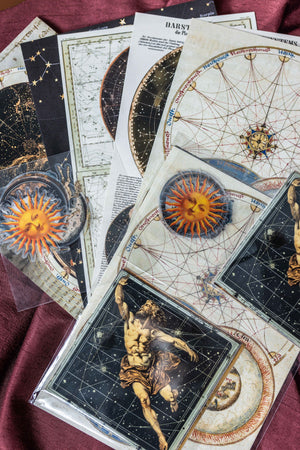
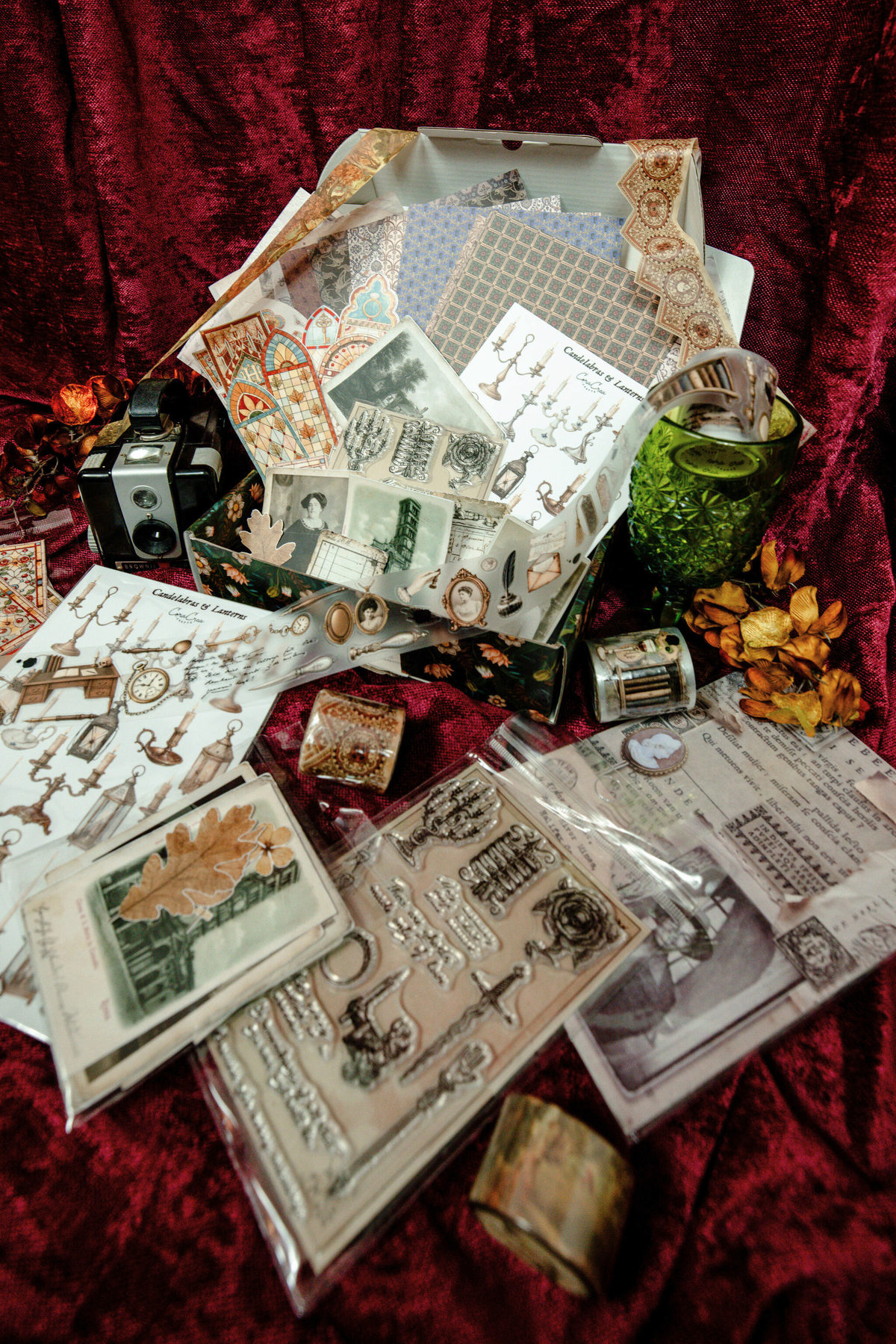
This is what makes a junk journal a junk journal. Paper materials from past decades—old book pages, postcards, receipts, ticket stubs, botanical prints, maps, sheet music.
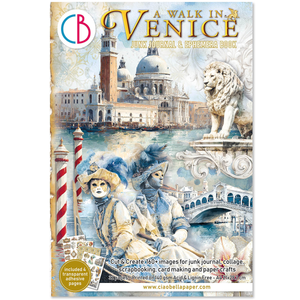
The best stuff comes from estate sales and antique shops. You want pieces with actual age—yellowed edges, faded ink, that papery smell. Reproductions can work (especially printable ephemera books like this one), but nothing beats the real thing.
Where to find it:
- Estate sales (bring cash, show up early)
- Library book sales—look for the "damaged" section
- CoraCreaCrafts monthly subscription (curated vintage ephemera delivered)
- Etsy (search "vintage ephemera lot")
- Your grandparents' attic (ask first)
Budget tip: Start with one medium-sized lot ($15-25). That's enough for 20-30 pages.
2. Washi tape (the workhorse)

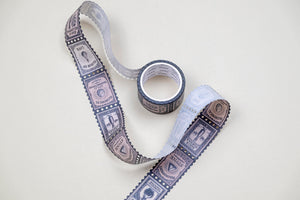
Washi tape does double duty—decoration and adhesive
I was skeptical about washi tape. It seemed like Instagram bait. But after three months of journaling, I get it—it's the most versatile thing in your kit.
Washi tape is decorative and functional. You can use it to stick down ephemera, create borders, cover mistakes, make tabs, layer textures. It's removable, so you can reposition things. And it comes in every pattern imaginable.
For vintage aesthetics, you want:
- Florals and botanicals (cottagecore staple) — like this apothecary flower set
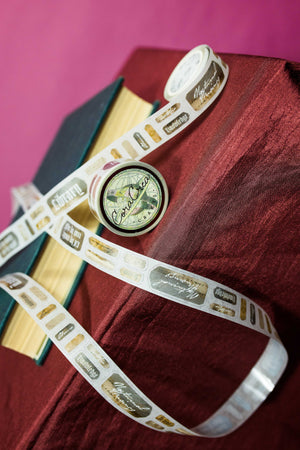
- Old typography and text patterns — burnt writing set
- Vintage postal marks and stamps — old time washi tape
- Width variety: 5mm for accents, 15-30mm for borders
How many rolls to start: 5-7 rolls. Get variety in width and pattern. CoraCreaCrafts includes at least one washi tape in every monthly box, which is a good way to build a collection without decision fatigue.
3. Rubber stamps and ink (instant vintage vibes)

Stamps add cohesion across pages
Stamps are the fastest way to tie your journal pages together. Even if your ephemera is all over the place aesthetically, a repeated stamp motif makes it feel intentional.
The stamps I use most:
- Vintage typography (typewriter fonts, old letters) — academia wooden stamp set
- Botanical (leaves, flowers, insects) — bees clear stamp
- Postal marks (dates, postage, "airmail")
- Decorative borders and corners
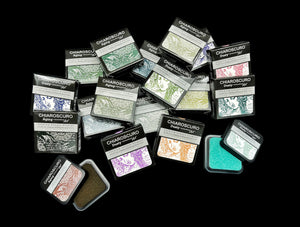
Ink colors: Sepia brown is the MVP. Black for contrast. Burgundy and forest green for variation. Skip the bright colors—they clash with vintage aesthetics.
4. Stickers (the controversial one)


Some junk journalers are purists about stickers—"use only authentic vintage ephemera!" But modern stickers designed with vintage aesthetics are practical. They're faster than cutting and gluing ephemera, and they don't run out.
The key is quality. Cheap mass-produced stickers look cheap. Stickers from indie designers (like CoraCreaCrafts) have better paper stock, more thoughtful design, and colors that actually match vintage palettes.
2026 trending sticker aesthetics:
- Cottagecore (mushrooms, florals, garden scenes)
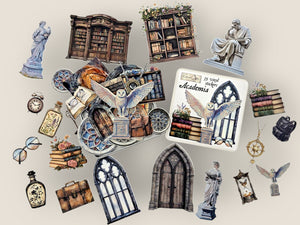
- Dark academia (vintage books, candles, keys)
- Nostalgic ephemera (old ads, product labels from the 50s-90s)
- Translucent/vellum stickers for layering
5. Vintage-style papers (your base layers)
You need paper to build on. Some people use blank journals; others build from scratch with loose paper. Either works.
Paper types that actually matter:
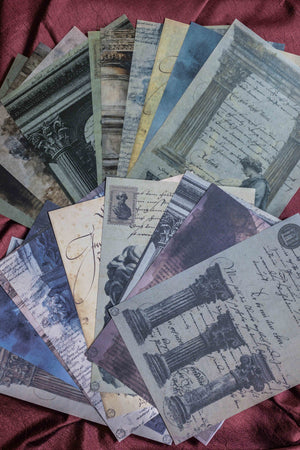
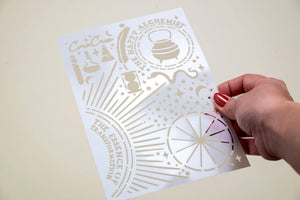
- Aged scrapbook paper with vintage patterns — alchemical manuscripts set
- Parchment/aged paper for that old-book feel — 4 elements paper set
- Kraft paper (natural, rustic, cheap)
- Vellum (translucent for layering)
- Old book pages (actual or reproduction) — book lovers rice paper pack
Paper weight guide: 80-100 gsm for ephemera and layering. 120-160 gsm for journal pages. 200+ gsm for covers.
6. Adhesives (what actually sticks)
I tested seven adhesives. Here's what works:
- Washi tape — Already covered. Use it for everything.
- Glue stick (Tombow Mono) — Clean, repositionable, doesn't wrinkle. Best for large pieces of ephemera.
- Mod Podge or gel medium — Permanent, strong, adds a protective layer. Can wrinkle thin papers, so test first.
- Double-sided tape runners — Quick and mess-free, but expensive per foot.
- Glue dots — Good for small dimensional items (buttons, charms).
Use multiple types in one journal. Washi for temporary stuff, glue stick for permanent layers, Mod Podge for sealing.
7. Writing tools (your handwriting matters)

Fountain pens add authenticity to the vintage aesthetic
Your handwriting is part of the art. Cheap ballpoint pens ruin the vibe.
Pens worth using:
- Black gel pen (Uni-ball Signo 0.5mm) — Archival quality, won't fade
- Sepia/brown gel pen — Instant vintage diary effect
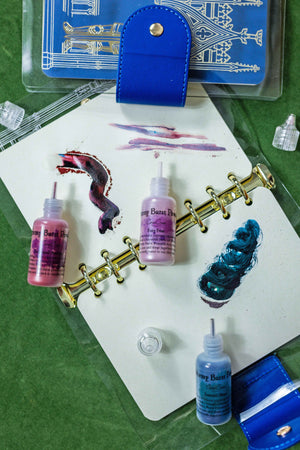
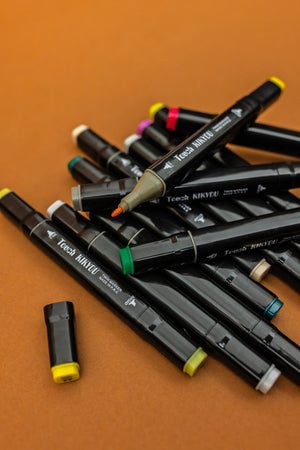
- Fountain pen — Carousel fountain pen in blue, green, or pink
- Fine-tip felt pen (Micron 0.3-0.5mm) — For detailed lettering
- White gel pen (Sakura Gelly Roll) — For dark papers
8. Embellishments (the finishing touches)
These are optional, but they add dimension:
- Dried pressed flowers (ultimate cottagecore)
- Vintage buttons — decorative brads work too
- Lace and ribbon scraps
- Metal charms (keys, clocks)
- Library pockets (functional + aesthetic)
- Manila tags
- Paper clips — clef clips for music lovers
Themed supply kits by aesthetic

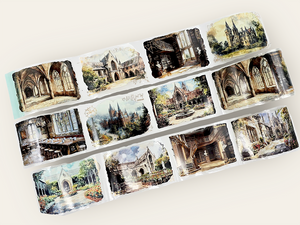
Library aesthetics perfect for dark academia and vintage journaling
Cottagecore junk journal
- Pressed flowers and botanical ephemera — vintage botanical calendar
- Mushroom-themed stickers
- Aged parchment papers — arabesque of flowers rice paper
- Floral washi tape — apothecary flower washi
- Nature stamps — bees & insects clear stamp
- Earthy ink colors (green, brown, cream) — aging & dusty inkpads

Nature-themed decorative tape adds whimsical touches
Dark academia junk journal
- Vintage book pages — book lovers rice paper pack
- Antique clock ephemera
- Fountain pen and sepia ink — carousel fountain pen
- Skeleton key charms
- University/library ephemera — academia box
- Classical architecture stamps — academia wooden stamp set

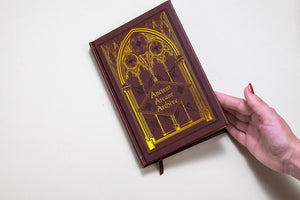
Ornate book designs epitomize dark academia aesthetic
Nostalgic/retro junk journal
- 1950s-1990s advertising ephemera — 50s fashion sticker book
- Vintage TV guide clippings
- Old concert tickets and music ephemera
- Polaroid-style photo corners
- Retro color palette stickers — nostalgia ephemera book
- Vintage postage stamp designs

Classic bookshelf imagery for timeless journal pages
Beginner shopping lists (tested budgets)
Budget: $30-50 (starter kit)
- 1 blank journal or composition book ($5-10)
- 5-7 washi tape rolls ($10-15)
- 1 vintage ephemera set ($8-12)
- 3-5 rubber stamps ($12-15)
- Adhesive variety pack ($8-10)
- Black gel pen ($3)
Budget: $100-150 (comprehensive kit)
- Quality journal with thick pages ($20-30)
- 15+ washi tapes ($30-40)
- CoraCreaCrafts subscription box ($30/month — ephemera, washi, stamps, stickers)
- Stamp set with 10+ stamps ($25-35)
- Premium adhesives ($15-20)
- Embellishment variety ($15-20)
My recommendation: Subscribe to a curated box like CoraCreaCrafts. You get 7-8 themed items monthly without having to hunt through Etsy for hours. After three months, you'll have enough supplies to know what you like.

Vintage library scenes inspire authentic journal aesthetics
Where to buy (ranked by value)
Online shops
- CoraCreaCrafts — Curated vintage ephemera subscriptions, high-quality stickers
- Etsy — Independent sellers, search "vintage ephemera lot"
- Amazon — Bulk basics (washi tape, adhesives)
Physical stores
- Michaels/Joann — Basic supplies, watch for 40% off coupons
- Antique shops — Best source for authentic vintage ephemera
- Thrift stores — Old books, postcards, greeting cards
- Estate sales — Treasure troves if you get there early
Free or low-cost sources
- Library book sales (damaged book sections)
- Free printable vintage ephemera (Pinterest, Artsydee, Printable Pretty)
- Old calendars and magazines
- Vintage-style junk mail (catalogs, ads)
- Family photo boxes (ask permission first)

Antique book aesthetics create depth and authenticity
Common beginner questions
Do I need to be artistic?
No. Junk journaling is about layering materials, not drawing. If you can glue and arrange ephemera, you can make pages that look good.
How much should I spend starting out?
$30-50 for basics. Or subscribe to CoraCreaCrafts ($30/month) and get curated supplies without decision paralysis.
Where do I find authentic vintage ephemera?
Estate sales, antique shops, library book sales. Or subscribe to a service like CoraCreaCrafts that sources it for you.
Can I use modern materials in a vintage journal?
Yes. Mix vintage and modern. Most 2026 junk journalers blend authentic ephemera with modern stickers and washi.
How do I prevent pages from getting too bulky?
Use thinner ephemera, avoid thick cardstock, limit 3D embellishments. Or embrace the bulk—chunky journals are a whole aesthetic.
Is junk journaling expensive?
It can be as budget-friendly or premium as you want. Free printables + thrift shopping = very cheap. Curated subscriptions ($30/month) offer the best value without the hunting.

Let vintage bookshelves inspire your journaling journey
Get started
Junk journaling doesn't have rules. Wrinkled pages, mismatched ephemera, imperfect layering—all part of it. The point is to make something tactile and personal in a world that's increasingly neither.
Related reading
- Vintage Ephemera 101: What It Is & How to Use It
- Hygge Crafting for Winter 2025-2026: Your Complete Guide to Cozy Journaling
- Valentine's Day 2026 Gift Guide
Article updated February 2026 with current trends, pricing, and product links. Research sources include Yahoo Creators 2026 craft trends report, RUSSH magazine, TikTok trend data, and Lal Loy Olan "ditch doomscrolling" analysis.