How to Use Wax Seals: A Complete Beginners Guide
The first time I used a wax seal, I melted the wax too fast and ended up with a lopsided crimson circle that looked more like a splattered berry than an elegant impression. I thought I'd ruined the envelope. Then I lifted the stamp and there it was. A clean, deep mark with every detail of the design pressed into the wax. I've been hooked ever since.
Wax seals are one of those supplies that look more intimidating than they are. There's heat, timing, a few seconds of pressure, and then the reveal. Once you've done it two or three times, the process clicks. This guide covers everything you need to get clean results from the start: which wax to choose, how to pick a stamp, the step-by-step technique for melting and pressing, and what to do if you'd rather skip the heat entirely.
Premade Seals vs Melting Your Own
Before you buy anything, it helps to understand the two paths into wax sealing, because they suit different situations and skill levels.
The first path is premade seals. These are ready-made wax impressions. The stamping has already been done in a controlled setting, and all you do is peel the backing and press the seal onto your envelope, letter, or journal page. No heat involved. They're the right choice when you want a reliable, consistent look without any equipment, or when you're sealing something delicate where a heat source isn't practical. If you want to go even simpler, or you want to avoid the thickness of a real seal, faux-wax seal stickers are worth knowing about.
The Writer Collection Premade Wax Seals are the easiest starting point for exactly this reason. Each seal is already stamped, fully set, and ready to adhere. The Writer Collection design is quiet and literary, with fine linework and an ink-stained aesthetic, so it works on letters, journal pages, and the outside of envelopes without looking too formal. If you're not sure whether wax sealing is something you'll keep up, these let you try the look before investing in tools.

The second path is melting your own wax. You heat wax beads with a small wax melting furnace, pour the melted wax from the spoon onto your surface, let it thicken for a few seconds, then press your stamp into it. This gives you more control over color, size, and texture. It's also where the ritual quality of wax sealing lives. The smell of warm wax, the few seconds of waiting, the lift of the stamp. Once you've done it a handful of times, it's hard to stop.
The Sealing Wax Beads are designed to work in a standard wax melting spoons and are great to mix colors and create your own mélanges. The crimson color reads as deep and archival. It photographs well against parchment, cream envelopes, and dark paper alike. 5–8 beads per seal is about the right amount, depending on the size of your seal. Start with a small amount and adjust from there.

Quick Guide: Which Should You Choose?
New to wax sealing and just want to try the look? Start with premade seals. Ready to learn the full technique, or want to choose your own colors? Buy wax beads and a seal. There's no wrong answer. Many journalers keep both on hand.
How to Choose a Seal
The stamp you choose affects both the style of your seals and how easy they are to use. A few things to consider before buying.
Handle size matters more than most beginners expect. A wider handle is easier to press evenly across a full wax pool. Narrow handles can dig into one side and leave an uneven impression, especially on your first few attempts. If in doubt, go for a handle that feels comfortable to hold flat against a table with one hand pressing down. A handle isn't absolutely necessary, though. Some crafters prefer using the brass seal on its own, and seals are easier to store that way too.
The Orchid Wax Seal Handle is one I keep on my desk even between projects. The orchid design reads well in wax and looks just as good sitting out as it does in use.

Simpler handles come in a range of sizes and colors too. Browse options here.
If you're drawn to the specimen-collector side of the aesthetic, think pinned insects, field journals, and natural history plates, a stamp inspired by entomology fits right in. Beetles, moths, fine-lined insects, antique specimen frames. Match the stamp design to the paper you're using and the whole thing reads as intentional.
Explore the Specimen Collection Wax Seals


Step-by-Step: Melting and Pressing
The technique is simple once you understand the timing. The most common beginner mistakes are either moving too fast (pressing before the wax has thickened enough) or too slow (waiting until the wax has already started to set, which gives you a rough surface and poor detail). This is the process that works.
-
Prepare your surface. Work on a flat, firm surface like a table, not a soft mat. Have your seal, envelope or paper, and heat source all within reach before you start. Cold environments slow the wax, warm rooms speed it up. Tip: Put your stamp in the freezer for 5 minutes before your first seal. Cold metal releases from wax more cleanly.
-
Choose your beads and load them into your spoon. Use 5–8 sealing wax beads in your spoon. Light a tealight beneath your furnace and set the spoon in the center. Allow the wax to melt slowly until it becomes smooth, creamy, and slightly glossy. If it begins to bubble, the wax is too hot and has passed the ideal pouring point. Tip: Mix several colors and let them intertwine without fully mixing them for fun and colorful results.
Alternative 1: You can use wax sticks with a wick, which melt directly onto the envelope/surface of choice. They're a great option for trying wax sealing without investing in all the tools and equipment, as you will not need the spoon, candle and furnace. Browse wax sticks with wicks here.
Alternative 2: You can also find wax sticks made for glue guns. This method is often preferred when making wax seals in larger quantities, as it melts the wax more quickly and allows for more precise pouring. Browse wax sticks for glue guns here.
-
Pour the wax pool. Hold the spoon directly above your sealing spot and let the wax drip until you have a pour large enough for your seal. Pour in one smooth motion. Don't dribble or start and stop. Tip: Use a small silicone mat or ceramic base if you want to practice or create multiple seals at once. You can then attach them to your final surface later using glue or a peel-and-stick adhesive. Silicone mats | Ceramic bases
-
Wait for the thickening window. When pouring, if the wax feels too runny, wait a couple of seconds before pressing your seal down. That's the thickening window. Watch the edges of the pool. When the outer 1mm starts to lose its glossy shine and looks slightly matte, you're in the window. This usually takes a few seconds.
-
Press the stamp down evenly. Bring the stamp down in one deliberate motion, applying even pressure across the whole face. Don't rock it or press one side first. Hold it perfectly flat.
-
Hold for 10 to 15 seconds. Don't lift early. The wax is still warm inside even when the surface looks set. Give it a full count. If you used a chilled stamp, you can shorten this slightly.
-
Lift from one side. Peel the seal from any side, slowly, until your seal is completely off the wax. Tip: An imperfect seal is still a seal. The slight irregularity is part of the handmade quality.
Troubleshooting
Wax sticking to the stamp: Press earlier next time, or chill the stamp. Blurry impression: Press later, the wax was too fluid. Cracks in the seal: Wax cooled too fast in a cold room; work at room temperature. Pool too small: Add one more bead next time.
No Heat? Faux Wax Stickers
Not everyone wants to work with heat, especially on delicate handmade paper or in a situation where a glue gun isn't convenient. Faux wax stickers give you the same visual effect (the raised, circular seal look) as a peel-and-press application with no equipment required.
The Vintage Faux-Wax Stickers are my go-to when I want the wax seal look on journal pages where I'd rather not risk heat near layered paper. The designs have the slightly imperfect, hand-pressed quality of real wax rather than a flat printed look. They work particularly well on kraft envelopes, cream cardstock, and dark background journal pages where the contrast makes the seal stand out. For pen pal letters or art journal pages, they're often more practical than real wax.

Pairing Seals with Paper and Washi
A wax seal on blank white printer paper looks out of place. The seal needs the right surface to make sense. Something with texture, age, or visual depth. A few materials that work consistently well.
The Alchemical Manuscripts Paper Set is probably my favorite paper surface for wax sealing. The aged, manuscript-style background gives the seal a historical weight that plain parchment doesn't quite match. The paper feels like it was written on a century ago, and pressing a crimson seal into the corner turns a simple page into something that could have come out of an old archive. This set photographs beautifully under natural light.
For a lighter, more editorial surface, the kind you might actually write on and mail, the Book Pages Paper Set has the right texture. Printed with aged book page designs, it gives you a layering surface that already carries the literary register before you add a seal. A folded sheet sealed in the corner becomes an instant pen pal insert. It's also light enough to layer into a journal spread without adding bulk.

Washi tape and seals work well in the same spread because they occupy different visual registers. Washi is linear and horizontal; a seal is circular and centered. Running a strip of washi along the fold of a letter, then sealing the edge with wax, creates a complete closure that looks deliberate.
The Burnt Edges Washi Tape is the washi that photographs best alongside a dark wax seal. The flame-scorched paper texture sits in the same tonal range as deep crimson wax, so the two don't compete. A strip of this along the edge of a folded letter, then a seal at the closure point, is the combination I come back to most often.

For something lighter in color, gold foil washi alongside a dark seal creates a high-contrast pairing that looks very intentional on cream or parchment paper. The Dream Gold Foil Washi Tape has the right level of glimmer without being overpowering, and the foil catches light in photographs in a way that printed washi doesn't. It's the upgrade detail on a sealed letter that takes it from nice to very good.

Making a Complete Sealed Letter
Once you're comfortable with the basic technique, the sealed letter format brings everything together. Here's a combination that works well as a starting point.
Take a sheet from the Alchemical Manuscripts Paper Set. Fold it into thirds, like a formal letter. Run a strip of Burnt Edges Washi along the outer fold. Just one strip, not the whole edge. Then seal the overlap point, where the folds meet, with a single wax seal in the center. The wax acts as both decoration and closure. If you're mailing it, use a padded envelope to protect the seal from postal machinery.
For pen pal correspondence, the sealed letter format also works well as a journal entry. Dedicate a spread to the exchange. Paste the letter stub, the washi strip, and a photograph of the seal. Over a year of pen pal correspondence, that spread becomes a record of connection and craft at the same time.
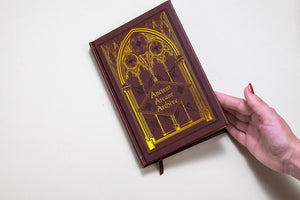
If you're building a pen pal practice alongside your journaling, the Ancient Arcane Foil Notebook holds the right visual register for correspondence-adjacent journal keeping. Its cover carries the same archival quality as a sealed letter, and the paper inside is thick enough to handle washi and layered materials without warping. Writing a letter is the first act; recording it in the journal is the second.
 ►
►
Your Wax Seal Starter Kit
Everything you need to start, whether you prefer the full melting technique or a heat-free approach.


Frequently Asked Questions
The shortest possible starter kit is three things: a heat source, wax beads, and a stamp. A wax seal furnace or a simple candle works for melting. A set of sealing wax beads in your preferred color covers the wax. One stamp handle with a design you love does the rest. That is genuinely all you need for a working first seal. If you would rather skip the melting entirely to start, premade peel-and-stick wax seals let you practice the visual placement without any heat at all. Once you know where you want seals on your pages and envelopes, stepping up to real poured wax feels natural rather than overwhelming.
Premade wax seals arrive ready to press onto paper: peel the backing, position, and done. They are perfect for journaling, card making, scrapbooking, and any project where you want the look without the setup. They photograph beautifully and have no risk of burns or drips. Melted bead seals are poured fresh, which means you control the texture, color mixing, and exact size of each seal. They have a slightly more organic appearance and work well for envelope sealing, gift wrapping, and projects where the ritual of making is part of the experience. Both are real wax seals. Which you reach for depends on your project and how much time you have in the moment.
The most common causes are lifting too soon and wax that is too hot. After you press the stamp, hold firm pressure for a full 10 to 15 seconds before lifting. The wax needs to cool enough to release cleanly. If you are still getting sticking, let the wax pool sit for an additional three to five seconds before pressing. You can also lightly dust the stamp face with a dry finger (the natural oils help) or give it a brief cool-down between presses. Brass stamp heads tend to hold heat longer than resin, so they benefit from slightly longer cooling time. If you are melting beads, try removing the heat source a moment earlier so the pool is thicker and closer to set when you press.
Aim for paper at or above 90gsm. Thicker paper handles the slight impression from pressing without warping or tearing at the edges of the seal. Smooth surfaces give the cleanest impression, though a light texture adds character rather than ruining it. Kraft paper, watercolor card, and heavy journal paper all work well. Very thin paper (standard printer paper or tissue) tends to buckle under the heat and weight of poured wax. For journal spreads, cream or ivory paper makes the seal photograph richer than bright white. Rice paper layers placed under the seal add visual depth. The seal sits slightly raised above the layered surface, which looks especially good in photos.
Yes, with one practical adjustment: put the wax seal inside the envelope rather than on the flap. Modern postal sorting machines pass envelopes through rollers that crack real poured wax seals. A seal on the outside is a beautiful detail when hand-delivering a letter or using a padded mailer, but for standard post it works far better as an interior detail. Tuck a sealed card or folded paper inside the envelope and the recipient opens to find the seal intact. Faux wax stickers on the outside of an envelope are completely safe to post by machine, as their flat flexible backing survives the rollers without cracking.
Real wax seals are poured or pressed from melted wax beads and have a slightly domed three-dimensional surface. They crack if flexed and cannot go through postal machinery. Faux wax stickers are self-adhesive labels printed or cast to look like wax seals. They are flat, flexible, postal-safe, and have no melting or heat involved. Visually, quality faux wax stickers are very convincing, especially in photographs. In hand, the material difference is obvious to anyone who has held a real seal. Both are completely legitimate journaling supplies. Faux wax is the practical choice for planners, letters you are actually posting, and any project where you need quick repeatable placement. Real wax is the choice when the ritual of making the seal is part of what you enjoy.
Side lighting is the single biggest improvement you can make. Position your light source (a window or a lamp) at roughly a 45-degree angle to the seal rather than directly above it. This raking light catches the raised texture and makes the impression read clearly in photographs. Soft natural daylight from a north-facing window is ideal. Avoid overhead artificial lighting, which flattens the texture entirely. For color, dark and jewel-toned wax photographs richer than pastel. Burgundy, deep plum, forest green, and black photograph particularly well against cream or kraft paper. Place the sealed letter on a surface that complements it: a linen cloth, a wooden tray, or a stack of aged-looking books all work. Keep the background simple so the seal stays the focal point.
Wax seals work beautifully in journals and are one of the most versatile mixed-media journaling supplies. In a journal context, place a seal at the end of an entry as a closing mark, in the corner of a spread as a decorative anchor, or pressed directly onto a layered rice paper background before journaling on top. They also work as bookmarks when the journal is sealed shut. Premade peel-and-stick seals are ideal for journal use because they lie flat and do not add the bulk that a fully poured bead seal would create in a bound book. Pair them with washi tape layering and rice paper for a complete correspondence-letter aesthetic on the page. The Writer Collection Premade Wax Seals include a variety of classic and literary designs sized to work well at journal scale.
Happy sealing,
More from the Blog

22 June 2026
Cyanotype Journal Pages: Easy Sun Prints, No Drawing

14 June 2026
Pressed Flower Journaling 2026

20 May 2026
ADHD Journaling: How to Build a System That Actually Sticks

14 May 2026
How to Start a Junk Journal in 2026

6 May 2026
Washi Tape vs PET Tape: The Difference

18 April 2026
Mother's Day Stationery Gift Guide 2026: For the Journaler in ...